
Showing all 8 results


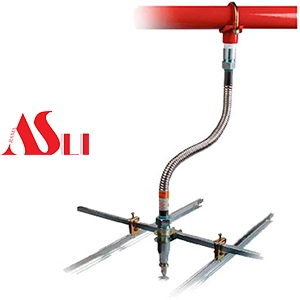


Sprinklers are an important fire safety equipment used to protect buildings and people from fire. This system consists of pipes, valves, and sprinkler heads that are automatically activated. This automatic system releases water or other special liquids in the form of a spray to control the fire and prevent its spread.
Sprinklers are designed in different types that differ in the amount of heat required to activate them, depending on the type and location where they are installed. These systems can be activated temporarily or permanently and, depending on the type of fire and the environment used, use water, powder, gas, or other chemicals.
The benefits of fire sprinklers include the following.
Types of fire sprinklers are divided into several main categories, such as up-flow, down-flow, wall-mounted, and decorative sprinklers, each of which is used according to the type of roof, architectural design, access to plumbing, and protective purpose.
An upright sprinkler is a fire extinguishing system equipment that, unlike a downspout sprinkler, is installed upright on a pipe and spreads the water downward and around in an umbrella pattern after hitting the deflector. Upright sprinklers are suitable for factories, industrial sheds, parking lots, and large workshops.
One of the most common types of sprinklers used in water fire extinguishing systems is the pendent sprinkler, which is designed to be installed on the ceiling and sprays water downward. Pendent sprinklers are used in closed spaces such as offices, warehouses, stores, and office buildings. Among the advantages of this type of sprinkler are its low maintenance cost and easy and standard installation.
A concealed sprinkler is a type of built-in sprinkler that is installed in the ceiling and only a decorative cover is visible. This cover is removed during a fire and the temperature rises, activating the nozzle.
Application: This system is used for luxury buildings, hotels, towers and environments where appearance is important.
Advantages: Beautiful appearance for a place where decoration harmony is important. Also maintaining the strength of the system in the inactive state
A sidewall sprinkler is a type of fire sprinkler that is installed on the wall instead of on the ceiling and sprays water horizontally or semicircularly into the space. This sprinkler is specially designed for spaces where it is difficult or impossible to install a ceiling.
Application: Used for spaces with high ceilings or unsuitable for installation in small rooms or spaces where access to the ceiling is difficult.
Advantages: Easy installation in some environments relative to the ceiling, suitable coverage in limited spaces
Types of fire sprinklers based on the type of reaction to heat and the activation mechanism are divided into two main categories: quick reaction and standard reaction. This classification plays an important role in selecting the right sprinkler for each environment.
The Quick Response Sprinkler (QR) is designed for faster activation against temperature increases and has a higher sensitivity to temperature increases. This type of sprinkler is used in environments with high population density such as hospitals, educational centers and office and commercial buildings to save lives faster. This product has a 3 mm bulb diameter and a response time of 30 to 60 seconds.
When the ambient temperature reaches a defined temperature (for example, 68 ° C), the liquid inside the glass bulb expands and causes the bulb to break. Immediately, the valve opens and water hits the diffuser plate at high pressure and is sprayed onto the fire area.
A Standard Response Sprinkler (SR) is a type of sprinkler commonly used in fire suppression systems that is designed to control a fire in a specific area, rather than simply provide rapid evacuation and protect lives. The bulb diameter is 5 mm and operates slower than quick response sprinklers.
When the ambient temperature reaches a set temperature, the glass bubble bursts and the water outlet opens. The water then hits the diffuser plate at high pressure and is sprayed into the surrounding area to control the fire.
Choosing the right pipes for a fire sprinkler system is a critical factor in the safety, durability, and proper operation of the fire extinguishing system. Some of the key and technical points to consider when choosing fire sprinkler pipes are as follows. Other points to consider for estimating and controlling costs are as follows.


